Oceania – a mind-blowing travel galaxy!
Oceania is immense. Difficult to define such an area precisely, we do know that it consists of 16 countries and at least as many territories, including, among others, Hawaii, (which actually belongs to another rather well-known country), Australia, New Zealand and Papua New Guinea, the largest countries in the group. It was the Danish geographer, Malthe Conrad Bruun, who first defined the concept of this collection of water and land that is now officially recognized as a continent – where it is often a very long way indeed to the next neighbor! Land-wise, it is the smallest of the continents – a colorful mélange that was first settled 30,000-50,000 years ago. European explorers didn´t show up until the 16th century onwards. The total population numbers relatively few in comparison with the land mass. Australia has approximately 24 million inhabitants, and the small island nations typically have less than a million each.

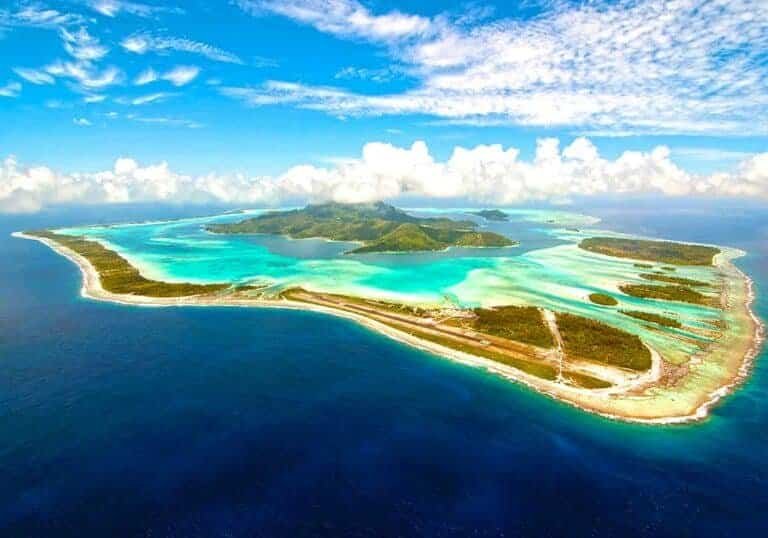
Life o Tahiti mount, biggest Tahiti island
What is Oceania?
Oceania is a vast and culturally rich region that spans over 10,000 islands across the Pacific Ocean. It includes some of the world’s most iconic travel destinations—Australia, New Zealand, Fiji, Tahiti, and Samoa—along with remote island nations waiting to be discovered. Whether you’re dreaming of surfing on the Gold Coast, hiking in New Zealand, or diving in the Coral Sea, Oceania offers unforgettable adventures in 2025.
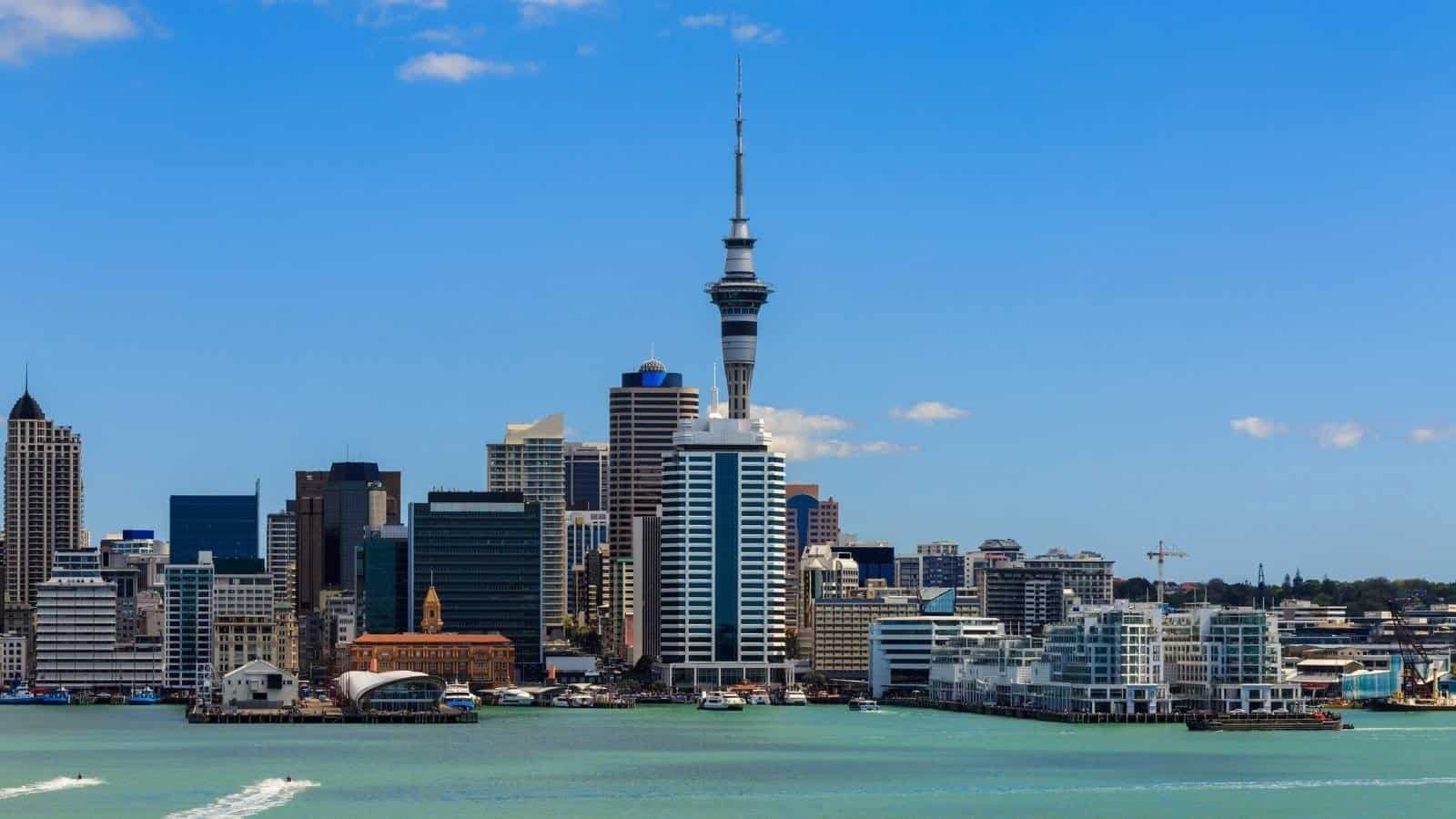
Auckland cityscape — New Zealand’s vibrant urban hub framed by harbors, volcanoes, and a dynamic Pacific vibe
A sparkling collection of tiny, yet stunning Pacific islands.
All of these tiny island nations of the Pacific have a great deal in common; their modest size, their geological structure and the similarities of their people. The islands are volcanic or were formed from coral; the population is Polynesian, Micronesian with a sprinkling of Papuan peoples in the western region. Added to this are the European immigrants. New Zealand was originally populated by Polynesians, though Australia was not. The inclusion of these two countries in the continent is important in terms of geology and the flora and fauna.
Oceania covers around 150 million square kilometers
The islands of the Pacific are spread out across an enormous expanse of ocean; 150 million square km., or the equivalent of 850 sq. km. of ocean for every 1 sq. km. km2 of land. Perhaps it is not surprising then that the first explorer to sail around the world, Ferdinand Magellan, from Portugal, didn´t spot any sign of land until he arrived in Guam in 1521 after a 4-month voyage. In addition to the Strait of Magellan, which links the Atlantic and Pacific Oceans, he also gave this vast expanse of water, it’s named, Mar Pacifico or ”Peaceful Sea”.
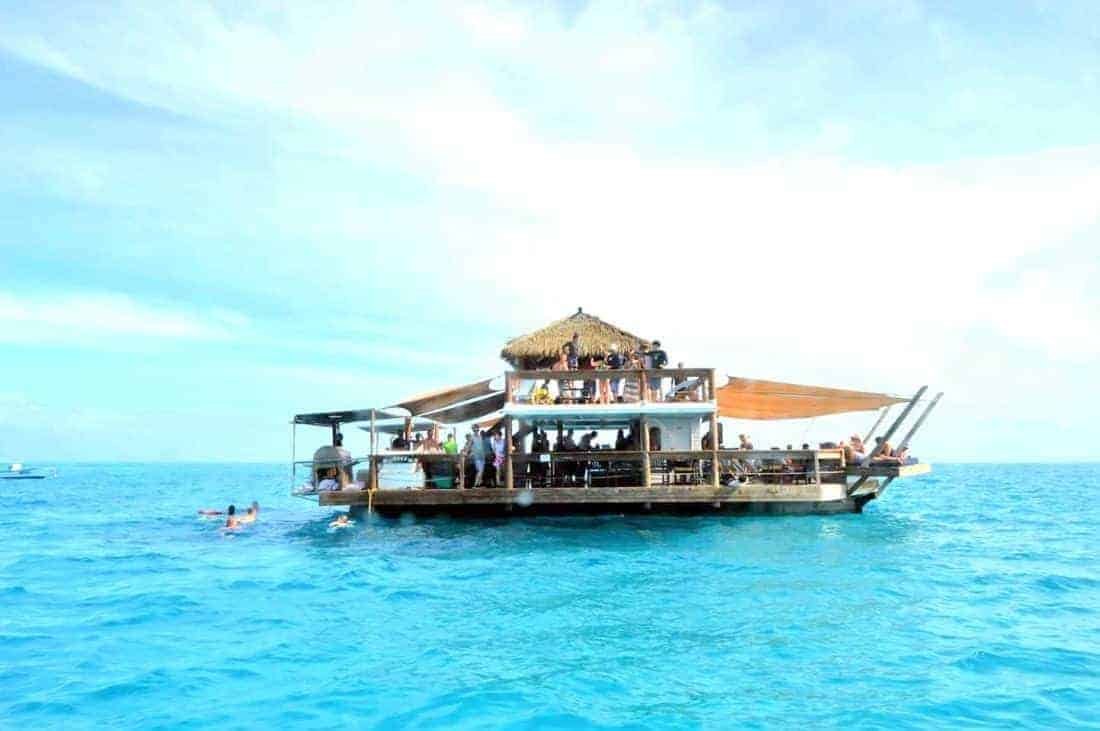
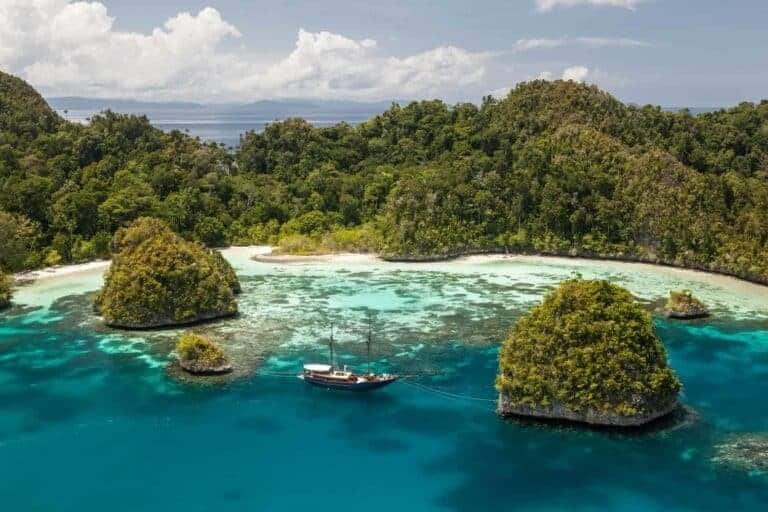
Fiji island hopping: Mamanucas
Oceania and the tropical climate, we long for
Again, not surprisingly the overall climate is heavily influenced by the sea; the temperatures vary little between summer and winter, or day and night, and depend more on the latitude and ocean currents in each particular area. Most islands have a tropical or subtropical climate. In what is often referred to as ”paradise” or ”bounty land”, the climate makes only modest demands on clothing or housing, but do not be lulled into complacency – it can also take revenge of the worst kind in the form of the violent hurricanes that can sweep through the area, leaving widespread destruction in their wake.
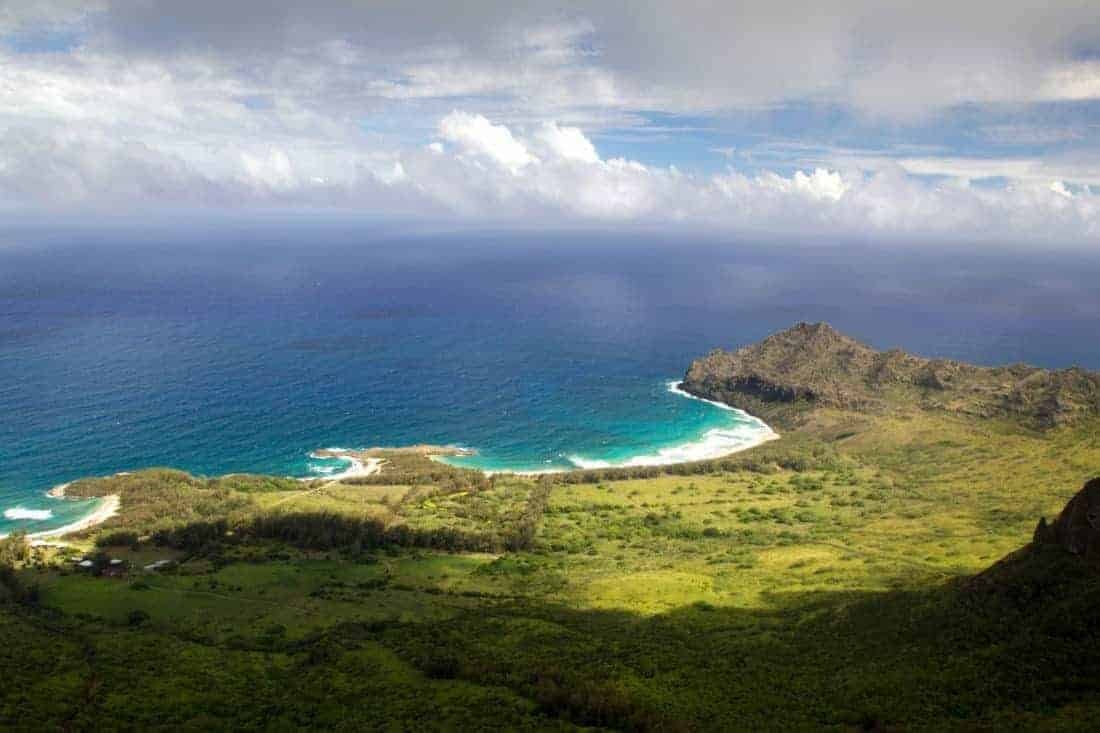
Kauai Hawaii east coast
Plant life flourishes without being affected by cold periods; precipitation and soil are the challenging factors here. A number of the islands, especially those that lie north of the equator, such as Jarvis, Palmyra, and Kingman, are uninhabited due to periods of drought, while the higher islands located in the monsoon belt receive heavy rain on the slopes that are exposed to the wind where the rain forests grow. (Hawaii receives over 4000 mm a year). The sheltered slopes have less precipitation and have areas of partial savannah. In many places, the soil consists of coral sand, but this can also support crops, especially the swamp taro which grows particularly well on the atolls and in swampy areas. In contrast, the high, volcanic islands are often richly fertile and many crops can be cultivated here.
Oceania a melting pot of ethnic diversity
Oceania was populated to much the same degree as it is today even before the Europeans arrived. Later, in addition to Europeans, waves of immigrants from India, China, and Japan swelled the native population. The combined population of two of the island groups, Hawaii and Fiji, make up more than half the total population of Oceania (not including Australia and New Zealand). Both Hawaii and Fiji are largely populated by immigrants (Americans and Indians respectively). The population is growing by approx. 3% a year in most places, which is high. Many of the smaller islands are actually over-populated today, even those which have traditionally practiced some form of population control (such as Tikopia).
The economy is largely still based on agriculture and fishing but, since the Second World War, tourism and development have become increasingly important. Farming methods in both Hawaii and the Fiji Islands are modern, and sugar and fruit are exported to the rest of the world. Many of the islands are self-sufficient and grow sweet potatoes, bananas, taro, and yams in the western region for own consumption.
A few islands are still dependent on mining; the most important mines are the nickel mines in New Caledonia, whilst the raw phosphate deposits on the small islands of Nauru and Ocean Island are gradually being depleted.
Almost all of the small island nations are still going through a process of development and growth, although it is hard to imagine the form of expansion this might take as opportunities in this region are somewhat limited. Resources are few, the population is spread out over a wide area, and transportation is a problem. Freight is mainly still transported around in small freighters that call in at the smallest of the islands only a couple of times a year to pick up copra, the dried pulp that is harvested from the coconut palms that grow everywhere.
Due to the modest size of most of the islands, Oceania doesn´t really have any large cities (if we exclude Hawaii, Australia, and New Zealand). The regional center is Honolulu on Hawaii and Suva, the capital of Fiji.
Popular Travel Destinations in Oceania
Why Travel to Oceania in 2025?
- Eco-conscious travel is thriving across the Pacific
- Island-hopping is easier than ever with improved transport
- Adventure travel is booming: diving, surfing, trekking
- Some nations are offering digital nomad visas
- Local cultures and experiences are more accessible to travelers
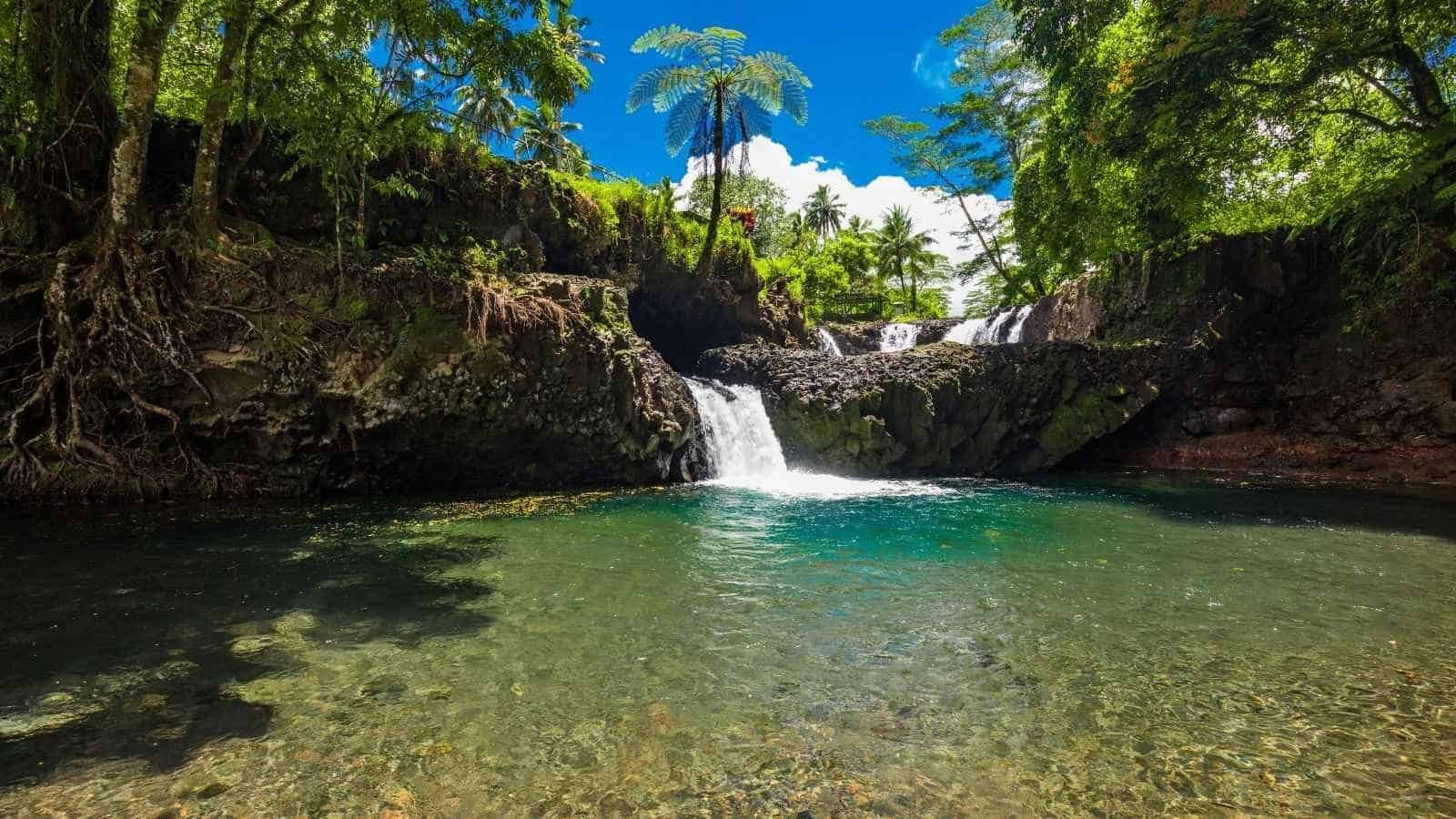
Togitogiga Falls — A lush jungle retreat and natural swimming hole on Upolu, Samoa
Whether you’re into luxury resorts or off-the-grid escapes, Oceania offers something for every travel style in 2025.
FAQ: What is Oceania & How to Travel There
What is Oceania known for?
Oceania is famous for stunning beaches, world-class diving, indigenous cultures, and unique biodiversity—from kangaroos in Australia to coral reefs in Micronesia.
Why is Oceania a trending destination in 2025?
Travel demand for nature, wellness, and authentic experiences has made Oceania one of the top picks for post-pandemic explorers.
How do I get around Oceania?
Major routes are covered by regional airlines; ferries and boats help connect the smaller islands. Domestic travel in Australia and New Zealand is easy and scenic.
What to see and visit in Oceania
White beaches that go on forever, beautiful coral reefs, smoking volcanoes and modern cities such as Sydney, Melbourne, Honolulu/Hawaii, Wellington/N.Z. to name just a few very good reasons to make this a trip of a lifetime! This group of islands encompasses Polynesia, Melanesia and the Fiji Islands, to name just some of them, over 1,000 islands, not to mention Micronesia. Read more about this fascinating destination here.
Bigger countries in Oceania
Three major groups of islands in Oceania
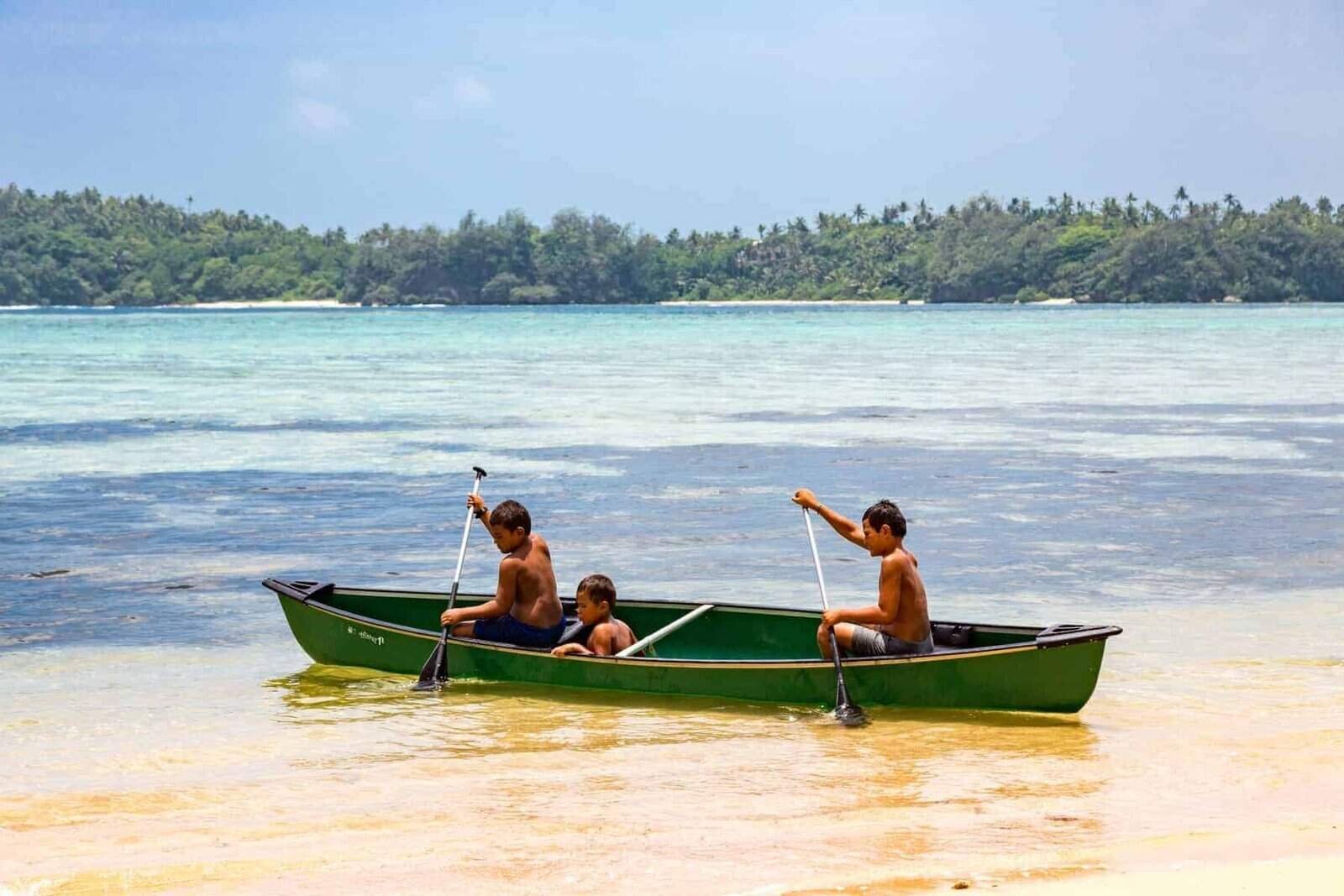
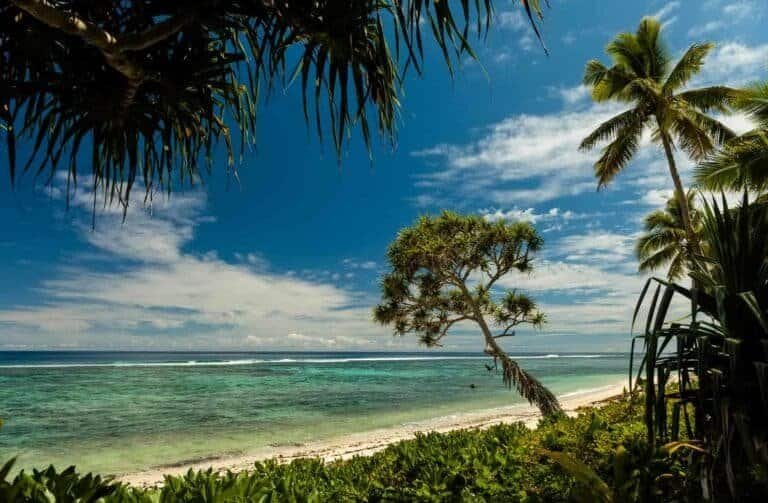
Vava`u island, Tonga, Polynesia, Oceania, South Pacific Ocean.
Selected islands and countries in Oceania