
The Taste of Chinese New Year
Part 2 of 3 – The taste of Chinese New Year food, the dishes, rituals, and togetherness that give the celebration its soul and its scent of hope.
A New Year’s Feast That Unites Generations
When we talk about Chinese New Year food, it’s about much more than taste. Families gather to share stories, laughter, and dishes that symbolize happiness and abundance. The New Year’s Eve dinner – nianyefan – is the most important meal of the year, and for many, the journey home to this dinner is a promise that’s never broken. It’s not only about food, but about belonging and continuity – values that are increasingly resonating with Western families too.
Dumplings, Fish, and Rice – Symbols of Prosperity
Every dish on the New Year table has a meaning. Dumplings (jiaozi) represent wealth because their shape resembles ancient silver ingots.
Fish (yu) is always served whole to symbolize completeness and abundance – and it’s never completely eaten, so there’s “plenty for next year.” Even rice carries deep symbolism, tied to life, endurance, and ancestors. Every flavor tells a wish, every form a story.
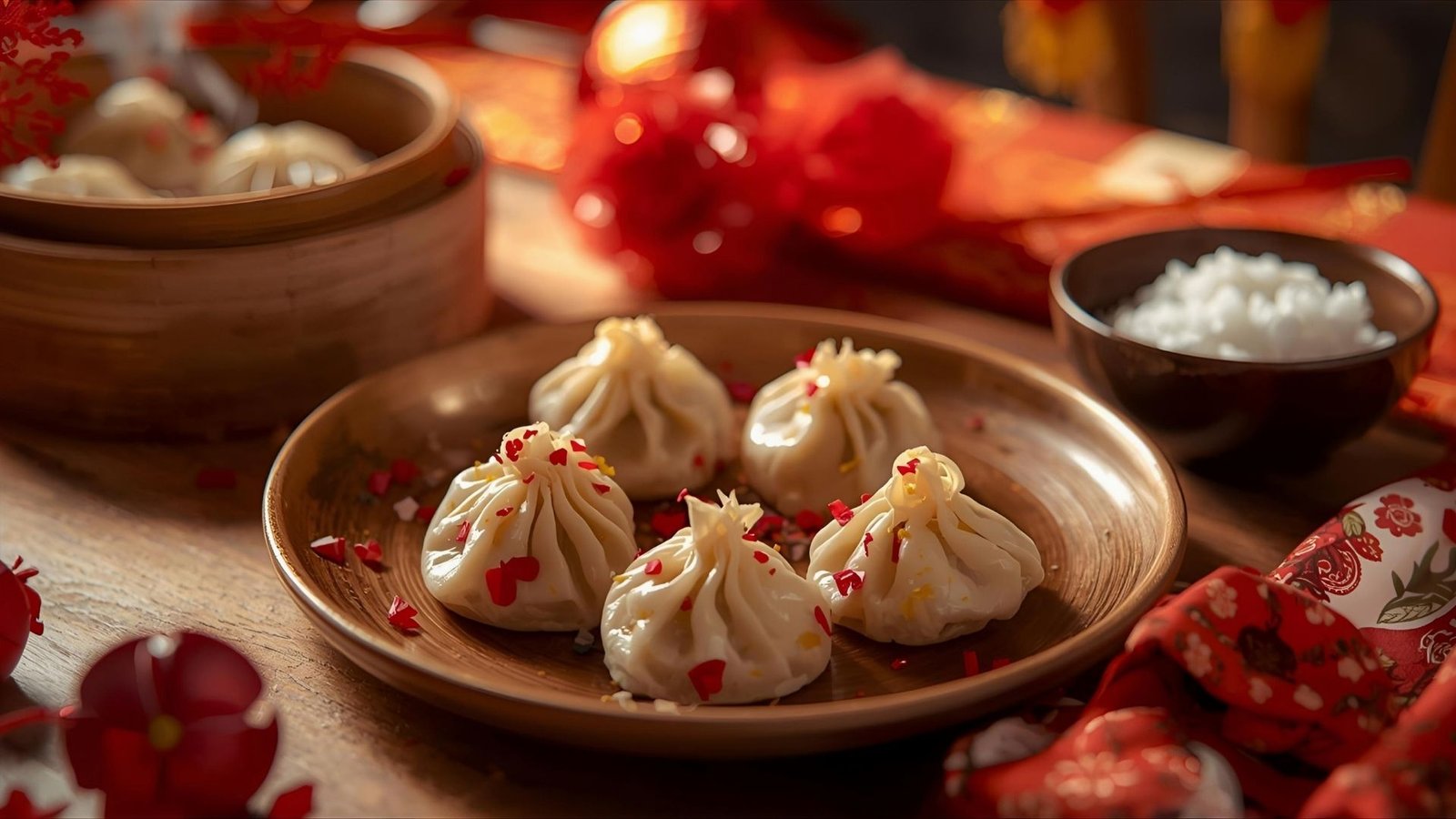
Traditional dumplings and rice dishes – timeless symbols of luck and prosperity during Chinese New Year.
Sweet Traditions
The New Year is also about sharing sweetness – both literally and figuratively. Glutinous rice cakes (niangao) are eaten to bring good fortune and “rise higher” in the coming year. Lotus seeds symbolize family growth, while tangyuan – small rice balls in syrup – represent unity and togetherness. These desserts are often tied to the laughter of children and the stories of grandparents – a living bridge between generations.
The Festive Rhythm of City Life
Outside, the streets come alive with dragon dances, drums, and colors. Sound and movement drive away evil spirits and welcome good luck. In cities like Shanghai, Hong Kong, and Singapore, entire neighborhoods turn into seas of red and gold. Even in Copenhagen, Chinatown celebrates with lion dancers, lanterns, and lively food stalls.
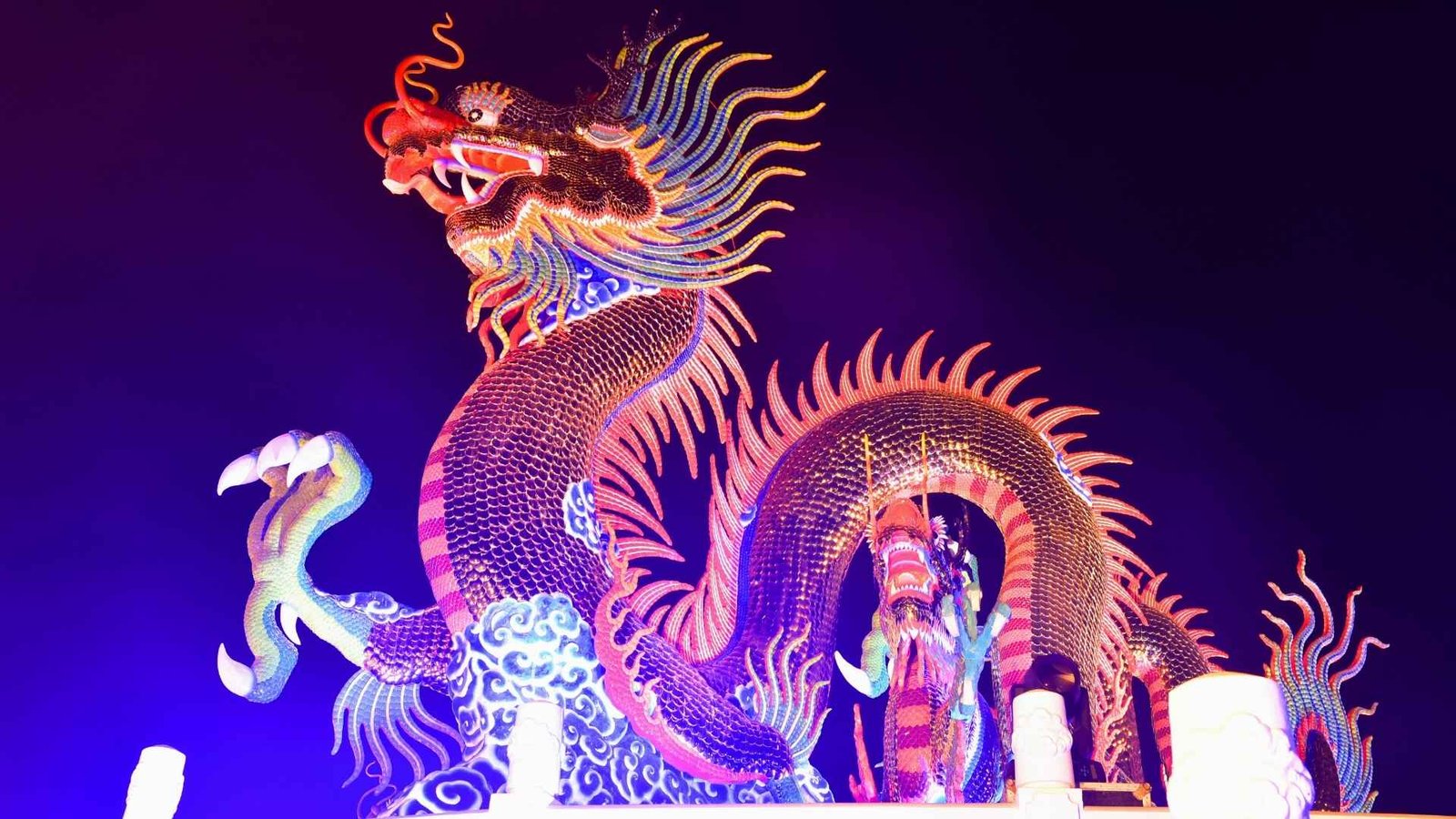
Colorful dragons and lanterns light up the night during the Lantern Festival – the grand finale of Chinese New Year.
The festivities culminate with the Lantern Festival, two weeks after New Year’s Eve. Lanterns float into the night sky like tiny prayers for peace. It’s a poetic symbol of how tradition still shines in modern times – and why so many travelers dream of experiencing it in the heart of Asia.
Family at the Center
In a world where many live fast-paced, global lives, Chinese New Year stands as a reminder of coming home – not just physically, but emotionally. Togetherness is the celebration itself, and the meal its universal language. It reminds us that travel isn’t only about places – it’s about the people we share them with.
Next article: Part 3 – Where to Experience Chinese New Year
Go back to the previous article here: Part 1 – Chinese New Year Traditions Explained
Discover the best places around the world to experience Chinese New Year – from Shanghai to San Francisco. Read more in our ultimate guide to Chinese New Year for insights on how food, symbolism, and tradition come together.
See how Chinese New Year 2025 – The Year of the Dragon was celebrated across Asia with grand feasts, parades, and festive dishes.
Curious about next year? Read Chinese New Year 2026 – The Year of the Horse to see how the festival evolves with new themes and traditions.
You may also enjoy travael in Asia, Chinese cuisine from Beijing to Shanghai, food and wine journeys, street food in Singapore, travel experiences in China, and cultural travel.